
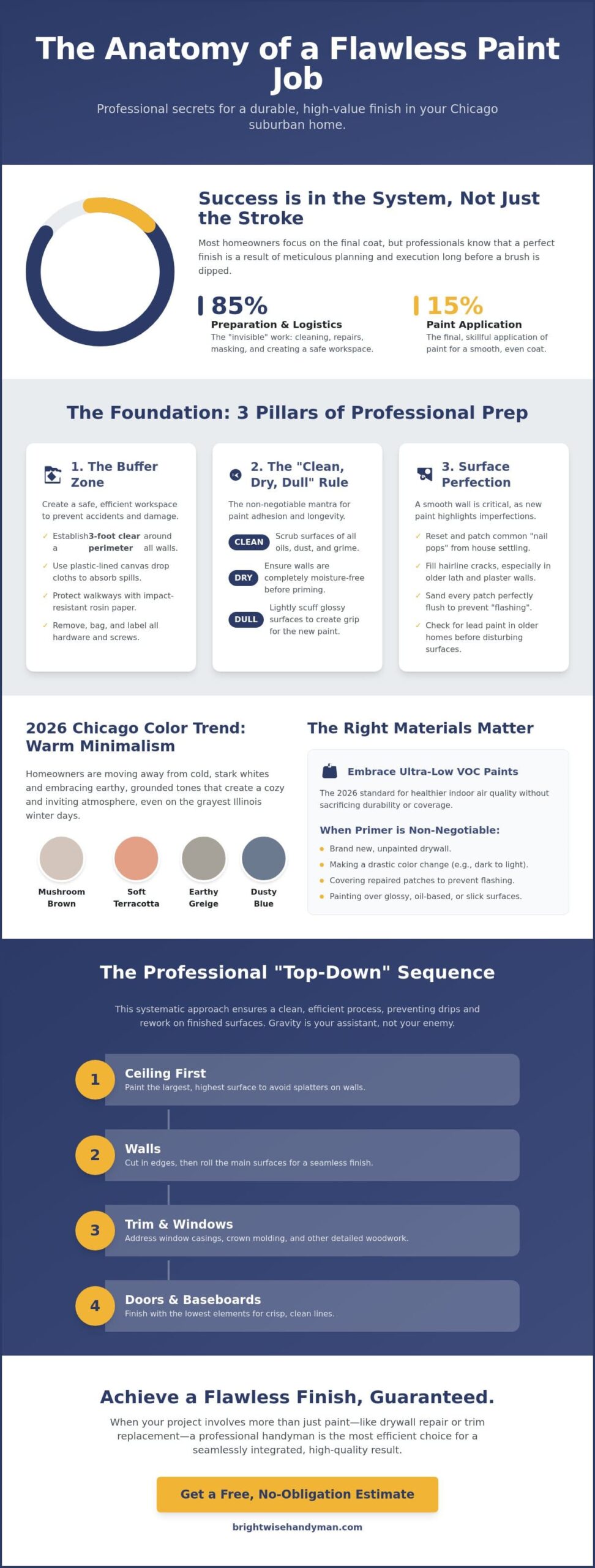
Most homeowners believe a professional look comes from the final stroke of the brush, but the truth is that great interior painting is 85% logistics and only 15% application. You’ve likely felt the frustration of spending a full weekend on a project only to end up with visible lap marks or paint peeling away because of a skipped prep step. It’s disheartening to see your hard work and money wasted on the wrong sheen or a messy cleanup that takes longer than the job itself.
We’re here to show you that achieving a flawless finish in 2026 doesn’t require an expensive full-scale crew; it requires a systematic approach to the “invisible” work that the experts use. We’ve gathered professional secrets tailored specifically for Chicago suburban homes to help you secure a durable, high-value result. This guide previews the essential preparation techniques, tool selections, and nature-inspired color trends you’ll need to complete your project with confidence and efficiency.
Key Takeaways
- Learn how color theory transforms your home’s mood and increases market value through the most cost-effective renovation available today.
- Discover the “Clean, Dry, Dull” rule and why a three-foot buffer zone is the secret to a professional, mess-free workspace.
- Navigate the 2026 shift toward Ultra-Low VOC paints and learn exactly when primer is a non-negotiable step for your walls.
- Master the professional “Top-Down” sequence to ensure every room receives a smooth finish without drips or unsightly texture issues.
- Understand why a professional handyman is the best choice for interior painting, especially when your project requires integrated drywall or trim repairs.
The Impact of Interior Painting on Your Home’s Value and Mood
In 2026, interior painting stands as the most cost-effective home renovation available to property owners. It offers a total visual transformation without the high costs or long timelines associated with structural changes. When we examine the history and types of paint, it’s clear that modern coatings have evolved into sophisticated tools for home stewardship. We view a fresh coat of paint as more than a chore. It’s an investment in your property’s longevity and your family’s daily comfort.
Color theory has a profound psychological impact on our living spaces. We’ve seen how the right palette can shift the entire energy of a room. For example, we often suggest calming blues for bedrooms to encourage rest and relaxation. In contrast, vibrant tones can energize a home office or kitchen. This emotional connection to color is why a professional finish feels so revitalizing. It’s about creating an atmosphere that supports your lifestyle.
A fresh project also delivers the “Clean Home” effect. Over time, walls naturally absorb household odors and trap microscopic allergens. A high-quality application seals these elements out, providing a fresh slate for your indoor air quality. For Elmhurst homeowners preparing to sell, this pristine look and “new home” feel offer a significant return on investment. It’s a powerful way to signal to buyers that the home has been meticulously maintained.
Aesthetic vs. Functional Benefits
A professional job modernizes outdated trim and hides the scuffs of daily life. Beyond the visual update, quality paint provides essential surface protection against moisture and wear in high-traffic areas. It acts as a durable shield for your drywall. Specifically, wall sealing creates a functional barrier against household dust buildup. We take pride in ensuring these surfaces stay protected for years to come.
2026 Color Trends for Chicago Suburbs
We’re seeing a distinct shift toward “Warm Minimalism” across the Chicago suburbs this year. Homeowners are moving away from stark, cold whites and embracing earthy, grounded tones like mushroom brown and soft terracotta. These choices are especially important during our Illinois winters. When natural light is limited, cool-toned paints can make a room feel icy. Warmer tones keep your space feeling cozy and inviting even on the grayest days. We also use accent walls to create depth in traditional suburban floor plans, making standard rooms feel more architectural and intentional.
Preparation: The Foundation of a Flawless Finish
We believe that a successful interior painting project starts long before the first drop of color hits the wall. In fact, we treat preparation as the most critical phase of the entire process. We always follow the “Clean, Dry, Dull” rule for surface readiness. Every wall must be scrubbed of oils, completely moisture-free, and lightly scuffed to ensure the new paint bonds properly. If you skip these basics, you’ll likely face peeling or bubbling within a few months.
Before we open a single can, we establish a three-foot “buffer zone” around the perimeter of the room. We move all furniture to the center and create a clear path for movement. This space allows us to position ladders and tools safely without feeling cramped. For floor protection, we prefer plastic-lined canvas drop cloths over thin plastic sheets. They stay in place and absorb spills instead of letting them pool. For high-traffic walkways or delicate hardwoods, we use rosin paper to provide an extra layer of impact protection against dropped tools.
We take a systematic approach to hardware removal. Every switch plate, outlet cover, and door handle is removed and placed in labeled bags with their respective screws. If you live in one of the many beautiful older homes in our community, please review this Lead Paint Safety Information before disturbing any layers of old finish. Protecting your family from dust is our first priority.
Drywall Repair and Surface Leveling
Newer suburban constructions often suffer from “nail pops” as the house settles over time. We reset these fasteners and patch them flush. In historic Elmhurst homes, we frequently encounter hairline cracks in lath and plaster walls. These require specific fillers that can handle the slight shifts caused by Illinois humidity. We sand every patch perfectly flush because any bump will “flash” or show through the final coat. If your walls need more than just a quick patch, our team can handle professional drywall repair before we begin the visual transformation.
Masking and Taping Techniques
While we often “cut in” by hand for speed and precision, painter’s tape is a valuable tool for protecting delicate trim. The secret to a crisp line is sealing the edge. We run a damp cloth or a tiny bead of paintable caulk over the tape edge to prevent bleed. Timing the removal is equally important. We pull the tape while the paint is still slightly tacky. If you wait until it’s bone dry, you risk tearing the fresh film and creating jagged edges that ruin the professional look.
Choosing the Right Paint, Primer, and Finishes
We believe that selecting the right materials is just as important as the technique used to apply them. In 2026, the standard for a healthy home has evolved. We now prioritize Ultra-Low VOC and “breathable” paint formulations for every interior painting project. These products reduce chemical off-gassing and allow moisture to move through the coating; this prevents the bubbling and peeling often seen in older Chicago-area homes. We also utilize modern AI-driven color matching technology to ensure your new walls perfectly complement your existing furniture and decor. Modern water-based latex paints have surpassed oil-based options in almost every category. They offer superior color retention, dry faster, and make the cleanup process much simpler.
To avoid wasting money or running out of supplies mid-job, we use the 350 square feet per gallon rule of thumb. This estimate helps us plan for the two coats required for a deep, even finish. While it’s tempting to skip the primer, we consider it a non-negotiable step for any significant color change or new drywall surface. Primer provides the necessary “tooth” for the paint to grab onto. While “Paint + Primer” products are convenient for simple refreshes, they often lack the specialized chemical properties needed to seal porous surfaces or block stubborn stains effectively.
The Sheen Guide: From Flat to High-Gloss
Matte and flat finishes are your best allies for ceilings and low-traffic walls. They absorb light and hide the small surface imperfections common in older plaster. For hallways and living rooms, we recommend eggshell or satin finishes. These offer a “goldilocks” balance of a subtle glow and easy washability. Semi-gloss remains the essential choice for kitchens and bathrooms. Its hard, reflective surface resists the high moisture and frequent scrubbing these rooms endure. Selecting the wrong sheen for a high-moisture area is a mistake that leads to premature paint failure.
Primer Types for Problem Surfaces
Specialized primers solve specific problems that standard paint cannot handle. We use stain-blocking primers to permanently hide water spots or old smoke damage. If you’re updating old, glossy oil-based trim, a bonding primer is required to ensure the new latex topcoat adheres properly. Without this intermediate layer, the new paint will simply scrape off with a fingernail. We take the time to match the primer to your specific wall conditions to ensure the finish lasts for years.
Professional Painting Techniques for Every Room
We approach the application phase with a strict order of operations. This systematic method ensures that gravity works in our favor rather than against us. We always follow a “Top-Down” sequence. We start with the ceilings, move to the walls, and finish with the trim and baseboards. This prevents fresh paint from dripping onto finished surfaces. If a stray drop falls from the ceiling while we work, it lands on a wall that hasn’t been painted yet. It’s a simple rule that saves hours of corrective work and ensures a pristine result.
One of the biggest secrets to a professional interior painting finish is maintaining a “wet edge.” We never let a section of paint dry before we overlap it with the next stroke. If the edge dries, you’ll see visible seams called lap marks once the room is finished. We work in manageable four-foot sections to keep the paint fluid and the transitions invisible. To find flaws before they become permanent, we use high-intensity side-lighting. By placing a work light at an angle against the wall, we can see every minor drip or thin spot that standard overhead lighting hides. This allows us to make corrections in real-time while the paint is still workable.
Loading your tools correctly is just as vital as the stroke itself. We don’t dip the entire brush into the can; we only submerge the bottom third of the bristles. This prevents paint from gumming up the metal ferrule and causing messy drips. For rollers, we ensure the nap is fully saturated but not dripping. If you hear a “squishing” sound while rolling, you’ve applied too much paint. If you’re ready to transform your home but want to avoid the stress of technical execution, you can book our professional interior painting services today.
Cutting In Like a Pro
We use a 2.5-inch angled sash brush for all corners and edges. This specific tool allows for the precision needed to create sharp lines without relying solely on tape. Instead of moving just your wrist, we recommend using your entire body weight to control the stroke. This creates a much steadier line. We always “feather out” the edges of our cut-in sections. By thinning the paint where the brush work ends, we ensure it blends seamlessly when we follow up with the roller.
Rolling for a Smooth Surface
We distribute paint using a “W” or “N” pattern to ensure even coverage across the wall. Pressure management is the key here. We never press hard on the roller frame. Pressing too hard actually squeezes paint out of the nap and creates an unattractive “orange peel” texture. Once a section is covered, we perform a final “back-roll.” This involves lightly running the roller in long, vertical strokes from ceiling to floor to create a uniform, professional texture across the entire surface.
Why Hire a Professional Handyman for Your Interior Painting?
We know that your time is a precious resource. While a DIY interior painting project might seem like a way to save money, it often stretches across multiple weekends and leaves your home in a state of disarray. We finish in a matter of hours what typically takes an amateur several days to complete. Our efficiency comes from years of experience and professional-grade tools that ensure the job is done right the first time. You won’t have to worry about buying expensive sprayers or ladders that you’ll only use once every five years.
One of the most significant benefits of hiring a professional handyman is our ability to handle integrated repairs. Most dedicated painting crews will paint right over a hole or a cracked piece of trim. We don’t do that. We can repair the drywall, fix the baseboards, or handle custom carpentry tasks before we ever open a paint can. This comprehensive approach ensures that the finished result isn’t just a new color, but a fully restored surface that adds real value to your property. We take care of the “invisible” logistics mentioned earlier so you don’t have to hire three different contractors for one room.
Our “Cleanliness Guarantee” provides you with total peace of mind. We take pride in our discipline and respect for your property. This means no stray drops on your hardwood floors, no splatters on your furniture, and perfectly clean hardware. We treat every Elmhurst home with the same meticulous care we give our own. It’s a level of stewardship that goes beyond simple labor; it’s about being a dependable partner in your home’s upkeep.
Handyman vs. Large Painting Crews
Large painting companies often carry high overhead costs and may prioritize massive commercial contracts over residential refreshes. We are the better choice for single rooms or smaller “refresh” projects. Because our business is streamlined, we pass those savings on to you for smaller scopes of work. You get the benefit of working with a local neighbor who knows the area and values long-term trust over aggressive sales tactics. We offer a personalized experience that a large, rotating crew simply cannot match.
The BrightWise Advantage in Elmhurst
Our team brings specific local expertise to every job. We understand how the drastic shifts in Illinois humidity affect wall surfaces and paint adhesion. We are committed to punctuality, transparency, and integrity. When we set a time, we show up. When we finish, we leave the workspace cleaner than we found it. We want to be the definitive choice for your future home maintenance needs. If you are ready for a professional, stress-free update, book your interior painting consultation with BrightWise Handyman today.
Ready to Transform Your Home?
Mastering interior painting is about much more than picking a trendy color. It requires a disciplined focus on the “invisible” work of surface preparation and the technical precision of maintaining a wet edge. You’ve seen how the right sheen and a top-down sequence can elevate a room from a simple DIY project to a professional-grade finish that protects your home’s value. These steps ensure your investment looks beautiful and lasts for years to come. We believe that every room deserves this level of meticulous attention.
We’ve served the Elmhurst community since 2022. Our team specializes in the essential drywall repair and interior finishing that ensures your walls look as good as new before the first drop of paint is even applied. We take pride in our 5-star local reputation for cleanliness and reliability. We promise to treat your property with the same care we give our own. Get a Professional Painting Estimate from BrightWise Handyman and let’s start your home’s next chapter together. Your dream space is just a consultation away.
Frequently Asked Questions
How much does interior painting cost for a standard room in 2026?
Industry data shows that the average cost to paint a single room currently ranges from $300 to $1,000. This price typically fluctuates based on the square footage of the walls, the height of the ceilings, and the amount of trim work required. We recommend getting a localized estimate to account for specific architectural details in your home.
How long should I wait between coats of interior paint?
You should wait at least 2 to 4 hours between coats when using modern water-based latex paints. Even if the wall feels dry to the touch within an hour, the paint film needs additional time to cure before it can support a second layer. Applying a new coat too soon can cause the first layer to “lift” or peel away from the surface.
Is it better to use a brush or a roller for interior walls?
A professional interior painting project requires both tools to be successful. We use an angled sash brush for “cutting in” around the edges, corners, and trim where precision is vital. A roller is then used for the large, flat areas of the wall to ensure a consistent, uniform texture across the entire surface.
Can I paint over old wallpaper, or must I remove it first?
We strongly recommend removing old wallpaper before you begin painting. While it is possible to paint over it, the moisture in the new paint often reactivates the wallpaper glue, causing it to bubble or peel. Removing the paper and cleaning the adhesive off the drywall ensures a smooth, long-lasting finish that won’t fail prematurely.
What is the best time of year for interior painting in the Chicago suburbs?
Winter is actually an ideal time for interior painting in our region because the lower indoor humidity helps the paint dry more efficiently. While spring and fall are popular, the controlled climate of a heated home in the winter prevents the paint from drying too quickly or too slowly. This leads to a more durable and even bond on your walls.
What should I do if I find lead paint in my older Elmhurst home?
If your home was built before 1978, you must follow federal lead-based paint disclosure laws. The EPA requires that homeowners and tenants receive an updated safety pamphlet before any renovation work begins. We recommend consulting with a certified professional to ensure that any lead-based surfaces are handled or encapsulated according to modern safety standards.
How do I choose between a matte and a satin finish for my kitchen?
Satin is the best choice for kitchens because its slight sheen makes it resistant to moisture and easy to scrub. Matte finishes are excellent for hiding wall imperfections, but they tend to trap oils and food splatters that are common in cooking areas. A satin finish provides the durability needed for high-traffic, high-mess environments.
Can a handyman handle both drywall repair and painting at once?
Yes, one of the primary benefits of hiring a handyman is the ability to combine these services into a single project. We can fix nail pops, patch cracks, and sand surfaces flush before we start the painting process. This integrated approach ensures a higher quality finish because the person applying the paint has already perfected the foundation underneath.
